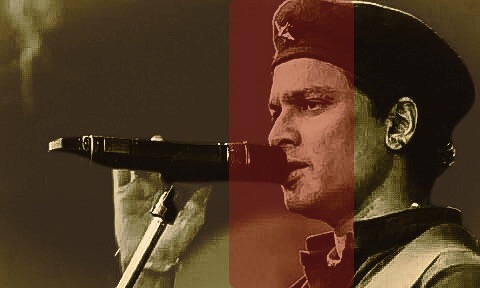
More than a month has passed since the death of Zubeen Garg, and yet the only tangible thing that the people of Assam have in hand is a promise, that justice awaits, which will be delivered soon. Amid all this, we have seen countless opinions on his death, ranging from outright murder allegations against the accused, to the involvement of a politico-social elite (for whom Zubeen was a mere commodity; this has been highlighted countless times on prime time debates in the mainstream Assamese media and opinion pieces) who over the years had been exploiting Zubeen for their own respective agenda. On the other hand, the masses continue to pour in to pay their last respects to his Xomadhi at Sonapur which has been named Zubeen Kshetra. This is probably the first time in the history of Assam where media (traditional as well as new) has taken the center stage in terms of developing narratives around a fact, i.e., Zubeen’s death. We know for a fact that he passed away in Singapore, and that a team accompanying and facilitating his stay at Singapore for the Northeast Festival was around him during his death. What we do not know as facts are the circumstances around the death. The Singapore police confirmed no foul play and urged all parties involved to not speculate and spread unverified information. A lot has happened in this one and a half months in Assam. To fill in for the lack of facts, a contest of narratives has surfaced which has laid bare the contradictions of power structures in contemporary mainstream Assamese popular culture.
The Ruling Regime and the Battle of Narratives
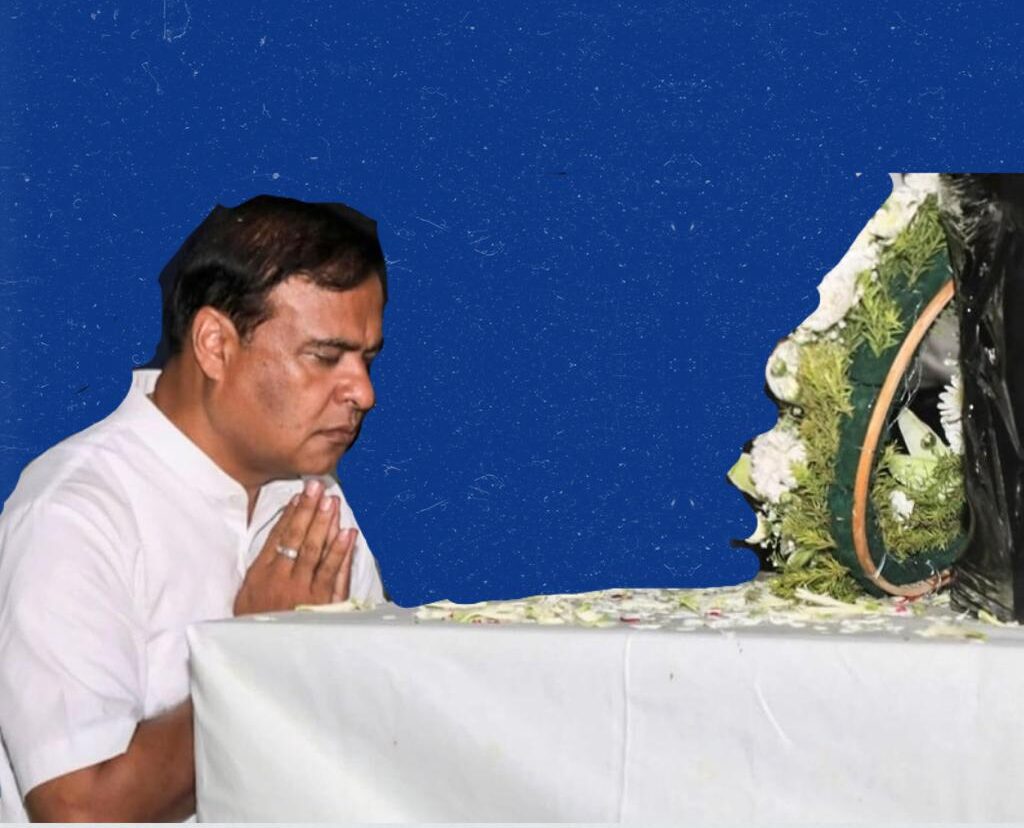
Narratives, no matter how convincing, are not facts. The process of narrativization itself is not a neutral process and it always carries the biases, prejudices and ideological formation of the person(s) or institutions which shape it. The dominant narrative that has established itself over the popular psyche in Assam is that Zubeen was murdered. To establish the narrative, the media channels put across numerous videos where Zubeen could be seen swimming along with his team and some other figures in the background. The videos which were played numerous times in Assamese prime time media were recorded by the people who were accompanying him. While none of the videos showed the exact moment where it could be confirmed that Zubeen collapsed during swimming, although he did appear tired and uncomfortable. It was then discussed extensively in Assamese media about the lack of moral responsibility that Zubeen’s team showed while he was allowed to swim which ultimately evolved into accusations that they plotted a conspiracy against Zubeen, and subsequently civil organizations demanded a second autopsy. It is important to highlight here that the first autopsy conducted by Singapore authorities stated his death to be by drowning. The second autopsy conducted by GMCH was not made public by the authorities in Assam, but ’eminent’ personalities from civil society organisations were called for discussions over it. By the time Zubeen’s body was put to pyre amid thousands of people coming in, the ruling regime in Assam had already clutched the narrative of the murder conspiracy by the prime accused Shyamkanu Mahanta (the Northeast Festival organizer) and Siddhartha Sharma (Zubeen’s manager). The ruling regime in Assam and its face the chief minister Himanta Biswa Sarma made no mistakes while making a choreographed performance out of it. His more than regular appearances in Assamese media, press conferences and somewhat strange Facebook lives where he directly addressed the grieving and justice demanding people, consolidated the control of the state over the narrative.
The ruling regime has at its disposal the ability to aestheticize popular emotion by continuing the performance of delivering ‘justice’ without facts, with the crosshair aimed at the upcoming elections.
Inception of a Counter-Narrative
As argued elsewhere, that people of Assam have always been an utterly emotional kind, and in a place where mainstream media along with the backdoor capabilities of social media, by and large become the primary sources of information, emotions can be tweaked and shaped. The narrative which initially hinted towards criminal negligence by the team accompanying Zubeen put forth by the media, eventually turned into that of conspiracy and murder (after the second autopsy) where the very team ‘poisoned him’. It is also to note that information regarding the long association of Shyamkanu and the stalwarts of Assam BJP including Sarbananda Sonowal and Himanta Biswa Sarma surfaced parallely on the internet and a counter narrative emphasizing the involvement of the social and cultural elite with the political establishment arose which built a populist narrative of the raiz, i.e., the people represented by Zubeen Garg during CAA-NRC protests, with his song Politics nokoriba bondhu and the protests in which the singer himself participated against the felling of trees at Dighalipukhuri in Guwahati by the authorities. This narrative intends to contradict the narrative of the state which promises to deliver ‘justice’ to the ‘murder’ of Zubeen. It is not a rocket science to come to conclusion that the ruling regime has its eyes locked on the upcoming elections in Assam in 2026 and delivering ‘justice’ by fair means or foul is the only way for them to garner unchallenged emotional support against the already fragmented opposition.
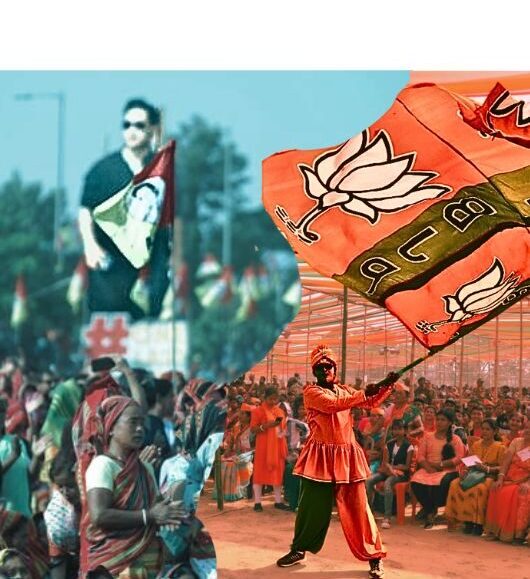
Two narratives go head-to-head now as we speak about the Zubeen phenomenon; one which promises to ‘deliver justice’, and the other which frames Zubeen along with the raiz (masses) against the socio-political elite of Assam. But it remains to be seen how effective the populist narrative will hold against the state led narrative of precision. After all, popular emotion doesn’t emerge in a vacuum, rather it is a space of negotiation with numerous factors wherein the dominant factor often turns out to be monopoly over the control of information which the ruling regime decisively possesses. The ruling regime has at its disposal the ability to aestheticize popular emotion by continuing the performance of delivering ‘justice’ without facts, with the crosshair aimed at the upcoming elections. The BTR elections in September played like a litmus test for the BJP, where they were reduced to 5 seats. The rallies organized by the ruling regime against an abstract authority demanding justice for Zubeen to counter the demands by opposition organizations, confirms their move to aestheticize popular emotion, where what matters is solely the image as a spectacle.
The populist narrative runs the risk of getting co-opted by the dominant one precisely because after all, emotions are a funny thing, without facts they can very well be tweaked, manufactured, and aestheticized as mere performance devoid of any radical change.
Performance of ‘Justice’ and Aestheticization of popular emotion
The aura of a paternal Himanta who is portrayed as a larger-than-life figure and yet approachable for anything by anyone (even for a motorcycle) helps to consolidate the narrative that no matter what, irrespective of clashes of ideologies or any business associations he or his wife had with the accused, justice will be served. It can be argued that the populist counter narrative which has various hues ranging from the ethno-nationalists to the progressive seculars intend to politicize the phenomenon (which obviously the ruling party has been accusing them to be doing) to bring to the fore the corruption and cronyism that lurks behind the spectacle of numerous Cultural Festivals (such as the Northeast festival which has been organized since a long time in various places) between business groups and ruling parties. Popular emotion in Assam shuttles like a ping pong ball between the two narratives, on one hand, the masses realise that there exists a socio-cultural elite who have relegated the masses to Bihu functions, while they populate the exclusive Cultural Festivals on global platforms. And on the other, the the figure of Himanta has been curated by the mainstream media as someone who listens to ‘all’ and delivers ‘justice’. However, the argument that the ruling party intends to deliver ‘justice’ without indulging in politics is a far-fetched one, since neutrality itself is political precisely because nothing evades politics of one kind or the other. As far as the populist counter narrative goes, how long will it stand the dominant ‘neutral’ narrative of delivering justice is a question that only time will tell, because popular emotion, as discussed, is always subject to change where capital and the control of information determine which narrative seeps into popular emotion. We already saw the news of six communities rallying collectively against BJP and demanding for their inclusion in ST plains list fading out amid the battle of narratives and regimes of emotions.
Now that Himanta has declared that the SIT is going to file the chargesheet before December 17th and the much awaited final film of Zubeen Roi Roi Binale became a moment of collective catharsis for the masses, what way the regime of emotion would follow is difficult to tell. The populist narrative runs the risk of getting co-opted by the dominant one precisely because after all, emotions are a funny thing, without facts they can very well be tweaked, manufactured, and aestheticized as mere performance devoid of any radical change.