Why is it that whenever we meet someone new, one of the first questions almost inevitably is, “And where are you from?” Perhaps it is a gentle attempt to avoid the sin of misidentifying someone, or perhaps it is a subtle invitation to conjure more assumptions. Either way, knowing where someone comes from seems as essential as knowing the syllables they respond to.
When I first set foot in Jawaharlal Nehru University for my higher studies, I was introduced to this very ritual of human interaction. My name is George- simple, neat, and satisfying one assumption. It makes sense, then, that I might be Christian. I look northeastern, a shorthand in this part of the world for “Asian/mongoloid.” My surname is Chakma, a strange word for Hindi sensibilities. And so came the question: “Where are you from?”
“Tripura.”
The pause that follows is almost cinematic. “Tirupura? Where is that? Somewhere in South India?” No, I insist, it’s a state in the northeast. “Oh, wow, great! That makes sense. I have some northeastern friends-they’re from Assam and Manipur.”
And just like that, the conversation moves on, as if the little ritual of clarification has been performed. The quotidian life of introductions, explanations, and tentative connections.
How I envy those who can name their city, their district, and require no further interrogation. For me, Tripura is a full-fledged state, and yet it often feels like a black hole in collective imagination, present, but almost invisible.
Well, according to one of my professors at JNU, I “come from a tribal belt”, a classification that, in his view, automatically makes me a hapless target of leftist professors who want to “influence” me.
Tirupura? Where is it?
So, what’s life like in Tirupura?. When people ask me that, I can’t resist slipping into my default mode- irritably sarcastic. I deadpan, “Oh, you know, it snows in Tripura.” Most of them nod, wide-eyed, and I let the moment linger. Not my fault, really; they’d rather lean on assumptions than on facts. Maybe it’s a quirk of human cognition: we’re wired to fill in gaps with guesses. But let’s be clear, what’s not scientific is the idea of snow in Tripura. The state is warm, wet, and decidedly tropical.
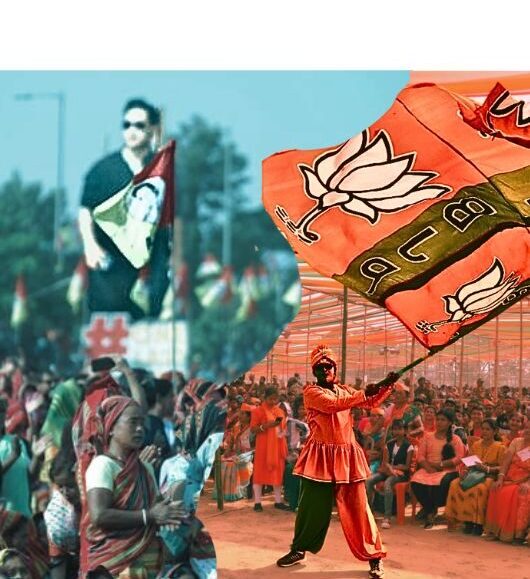
Maybe I should cut them some slack. Many belong to a student organisation entrusted with the divine duty of “nation-building.” After all, if airplanes supposedly flew in ancient India, why can’t it snow in Tripura? The irony, of course, is that their parent organisation’s government has been ruling Tripura since 2018. Their first chief minister was a major player in bringing the state “into the mainstream.” Tripura hit the headlines when that same leader declared that the internet existed during the Mahabharata, that civil engineers were naturally destined for civil services (“civil,” get it?), and that young people should sell milk or paan instead of chasing government jobs.
The sharper ones, usually the ones who’ve actually flipped through an NCERT geography textbook, tilt their heads and ask, “Are you sure it snows there?” That sliver of doubt, that tiny request for confirmation, makes me feel a billion times better.
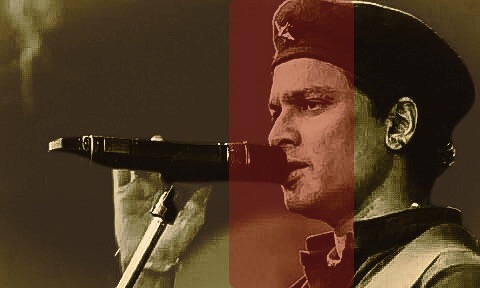
The more ideologically invested comrades, on the other end of the political spectrum, however, cite the Left Front government as their point of reference. It’s a slightly better starting place, but the common thread among all of them is the shock- genuine, unfiltered shock- when I tell them Bengali is Tripura’s lingua franca. In fact, roughly 70 percent of the population is ethnically Bengali. “Wait, what? Isn’t it a tribal state?” they ask.
Well, according to one of my professors at JNU, I “come from a tribal belt”, a classification that, in his view, automatically makes me a hapless target of leftist professors who want to “influence” me. In this narrative, I’m not a thinking, breathing, living entity who can make my own decisions. I’m just a pawn in someone else’s ideological chessboard. (The Tripura Files?)
Beyond the periphery
Mundane conversations aside, Tripura is almost always missing from maps of memory, from conversations, from imagination. “Oh, I’ve never met anyone from Tripura!” -I’ve lost count of how many times I’ve heard that sentence. I often joke with friends that if I submit a paper on Tripura to any conference, I’ll probably get accepted, not for the brilliance of the argument, but because no one else from there ever applies. It’s funny until you realise it’s actually not.
In most discourses on Northeast India, Tripura again slips into absence. When it does appear, it’s often as a mere footnote, a token example to illustrate Assamese jatiyotabadi anxieties about how indigenous peoples can become minorities in their own land. Never mind the methodological fallacies in comparing the two states – who cares? For those who know a little more, Tripura immediately evokes the tired migration trope. That’s the identity it has been reduced to: the state “too close to Bangladesh,” a cautionary tale: the dystopian future that awaits Assam if “illegal migration” is not contained.
Perhaps we, the people of Tripura, have also internalised that narrative. Bangladesh does surround us, yes, physically. Occasionally, Tripura finds a fleeting mention in YouTube videos or podcasts by dude bros, self-proclaiming to be “geopolitics experts” and government exam gurus. You must have heard them discuss how a dam in “Tripura” supposedly released water in August 2024, flooding parts of Bangladesh, or how, when Sheikh Hasina fled Dhaka, some assumed she escaped to Agartala, after all, it is the closest Indian city to Dhaka, and the one from which the Indian Army marched into Dhaka in December 1971.
Or they will refer to the recent podcasts of Pradyot Manikya, where he speaks passionately about the deplorable condition of Tripura’s indigenous peoples, a truth that rarely travels beyond the state’s borders. In another context, he mused that Northeast India could use a beach in the Bay of Bengal. The geopolitics dude bros and government-exam gurus loved it; they spun fantasies about India annexing the Chittagong division of Bangladesh, as if conquest were a shortcut to coastal access.
When people curiously ask why they meet so few of us from Tripura in the mainland, I usually give a shallow, oversimplified answer: perhaps because it’s a relatively peaceful and stable state. People from violence-prone regions often move out seeking safety and better opportunities. Tripura, by contrast, is calm, objectively backward in many ways, yet comparatively better off socioeconomically than many other states, not just in the region but across India (100 percent literacy Saar). So maybe we stay because we are comfortable. Why leave?
Of course, this is a lazy assumption. I have never studied migration patterns. But maybe that is the irony of it, Tripura is so distant, so unseen, that it feels like the periphery of the periphery.
Tripura remains both hyper-visible in narratives of migration and political anxiety, yet curiously absent from the everyday imaginations of the country or even just the region and discourses.
End note
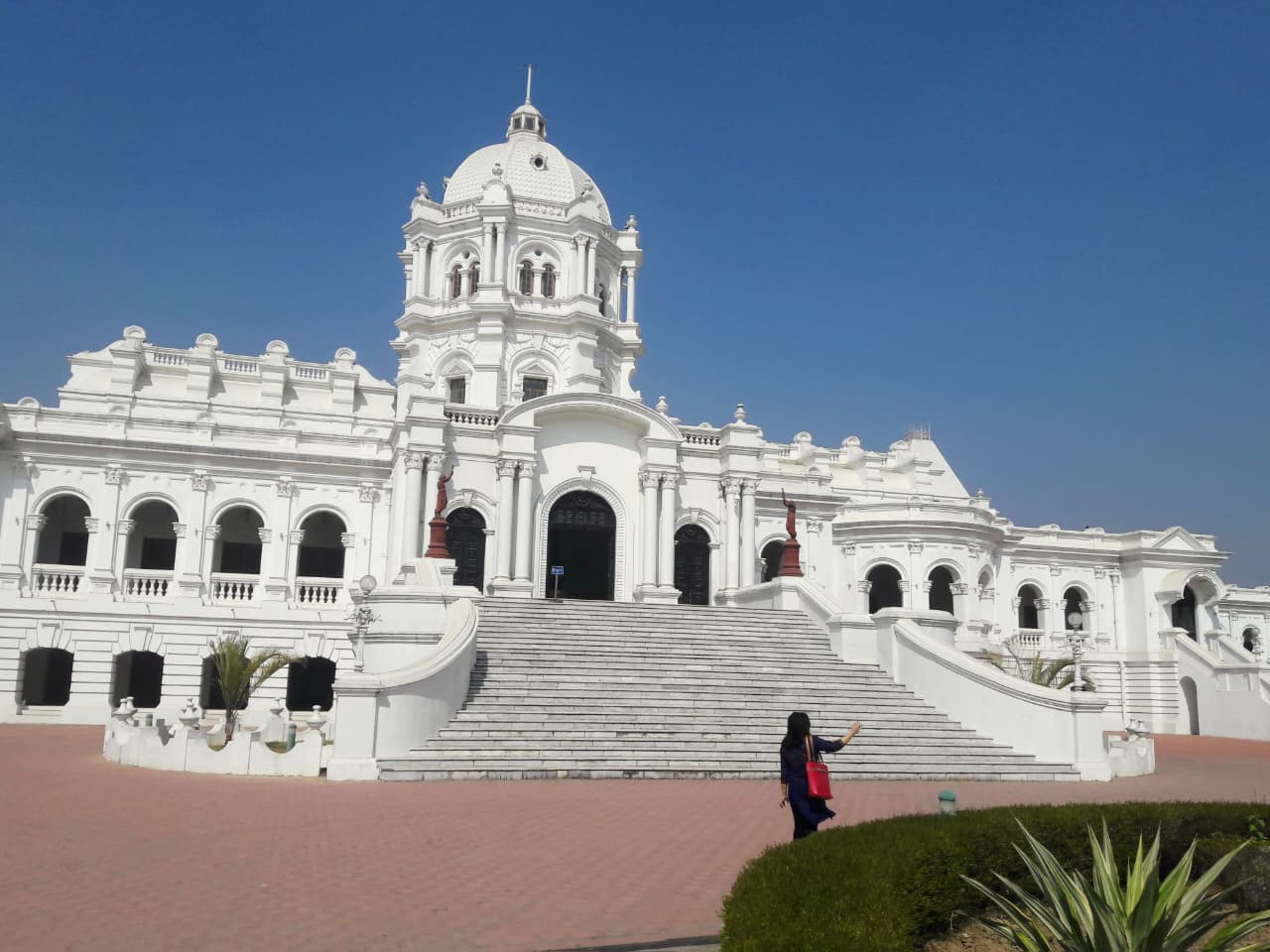
For a state that is so invisible, Tripura carries within it quiet paradoxes and contradictions. It is the second-largest producer of natural rubber in the country, has huge reserves of natural gas, boasts extensive tea gardens, and has near-universal literacy (thanks to the progressive policies of the Left Front government). It has also gifted the world the unmistakable and timeless melodies of S.D. Burman and R.D. Burman, and offered refuge and friendship to Rabindranath Tagore on his numerous sojourns- a connection that birthed poems, letters, and songs now woven into Bengal’s and even the entire country’s cultural memory. It even has the only lake palace outside Rajasthan- a detail so random it surprises even some of us who grew up there. And yet, these facts don’t quite puncture the fog of obscurity that surrounds it. Tripura remains both hyper-visible in narratives of migration and political anxiety, yet curiously absent from the everyday imaginations of the country or even just the region and discourses. Perhaps that’s what being from the periphery of the periphery means: to be known just enough to be stereotyped, but not enough to be understood.
And yet, beneath these markers of progress and cultural pride lies a more complicated history: a violent insurgent past born of dispossession, demographic transformation, and the slow erasure of indigenous voices. Today, peace is often mistaken for resolution, literacy for justice, and development for inclusion. Tripura thus remains suspended between recognition and neglect- known enough to be reduced to a trope, but never quite understood on its own terms.
The contradictions persist, despite the new government’s promise to bring the state up to speed in development and integration with the rest of the country. Yet what seems to be integrating seamlessly is the relentless destruction of lives and nature in the name of progress, alongside anti-people policies and politics fuelled by chauvinistic hatred.
So, when I am asked again, “Where are you from?”, I sometimes wonder which Tripura to name- the one of rubber, tea, and Tagore, or the one that endures in quiet contradictions. Perhaps both are true. Perhaps home, like memory itself, is a continued negotiation between what others see and what we remember.